
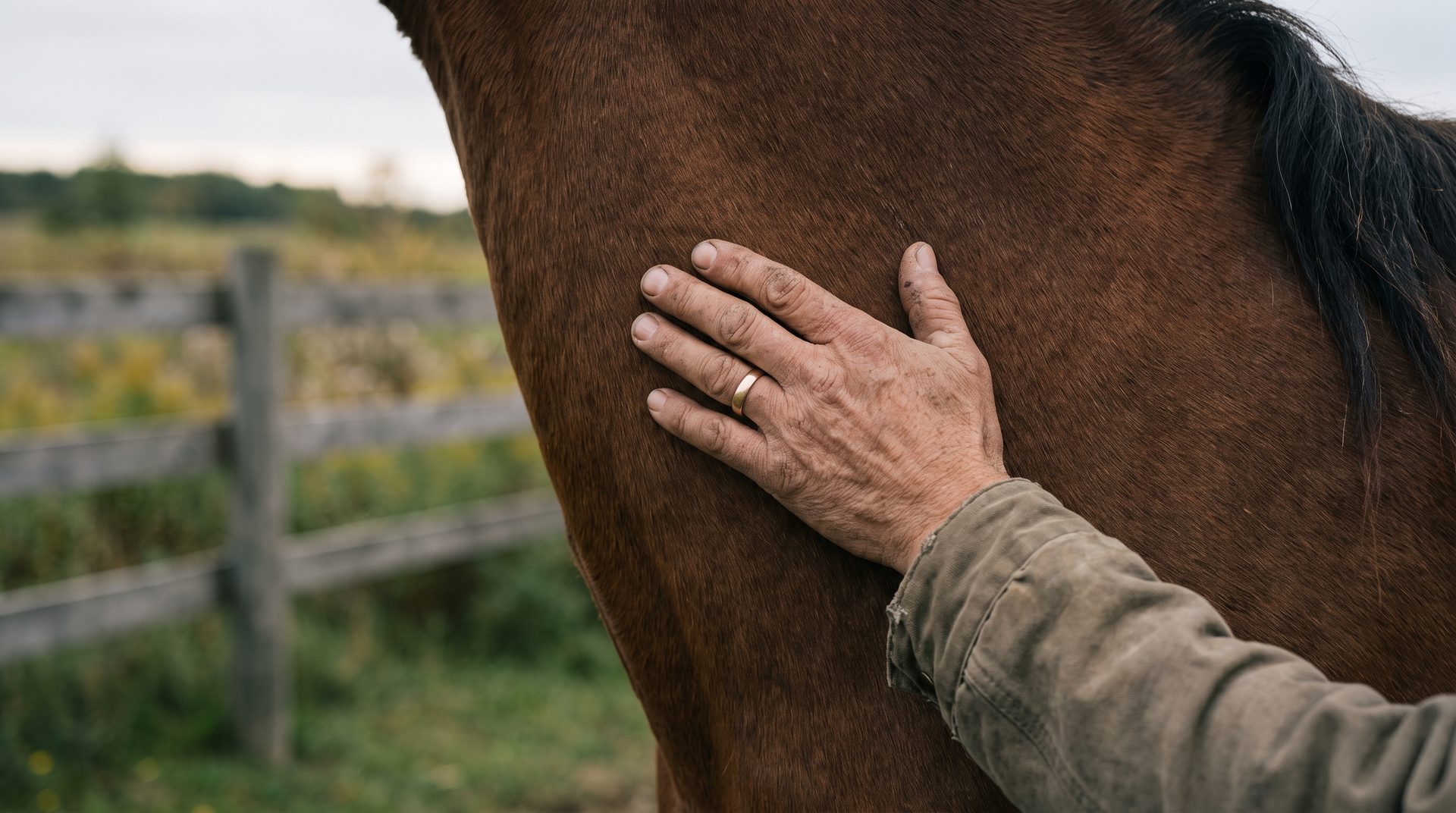
Equine-facilitated therapy near Trenton, Ontario
Therapy you can feel, on the ground beside a horse.
No riding. No pressure to explain yourself before you’re ready. On a working farm in the Northumberland hills, you’ll work beside horses whose honesty reaches what words sometimes can’t, guided every step by a registered psychologist.
Alongside traditional therapy, or on its own
Equine-facilitated therapy is an effective adjunct to more traditional forms of psychotherapy. It can work alongside the therapy you already have, or independently of it. Some people are drawn to it because they’d rather be outdoors than in an office, or because they’ve always found animals easier to be around than people.
You’re not looking for a quick fix, and this isn’t one. It’s another way in, one that starts with doing, not explaining.
A different entry point
Why horses, and why it works
Equine-facilitated therapy is experiential and ground-based. You’ll observe, groom, halter, lead, and eventually work at liberty with the horses. No riding is involved.
Equines (horses, ponies, minis, donkeys, zebras and yes, even asses) are large, sentient prey animals with nervous systems built to read their surroundings honestly and instantly. They respond to what’s actually in front of them, not to the story you tell about yourself. That directness gently bypasses the defences most of us have spent years building, and gives you real-time, trustworthy feedback on your own state. This isn’t based on spirituality or magical thinking about horses. Our work is evidence-based and grounded in neuroscientific knowledge. It’s about living beings that are incapable of pretending, and what that honesty makes possible.
Every session is guided by a licensed mental-health professional, often with an equine specialist alongside, so the experience stays safe, focused, confidential, and therapeutic.
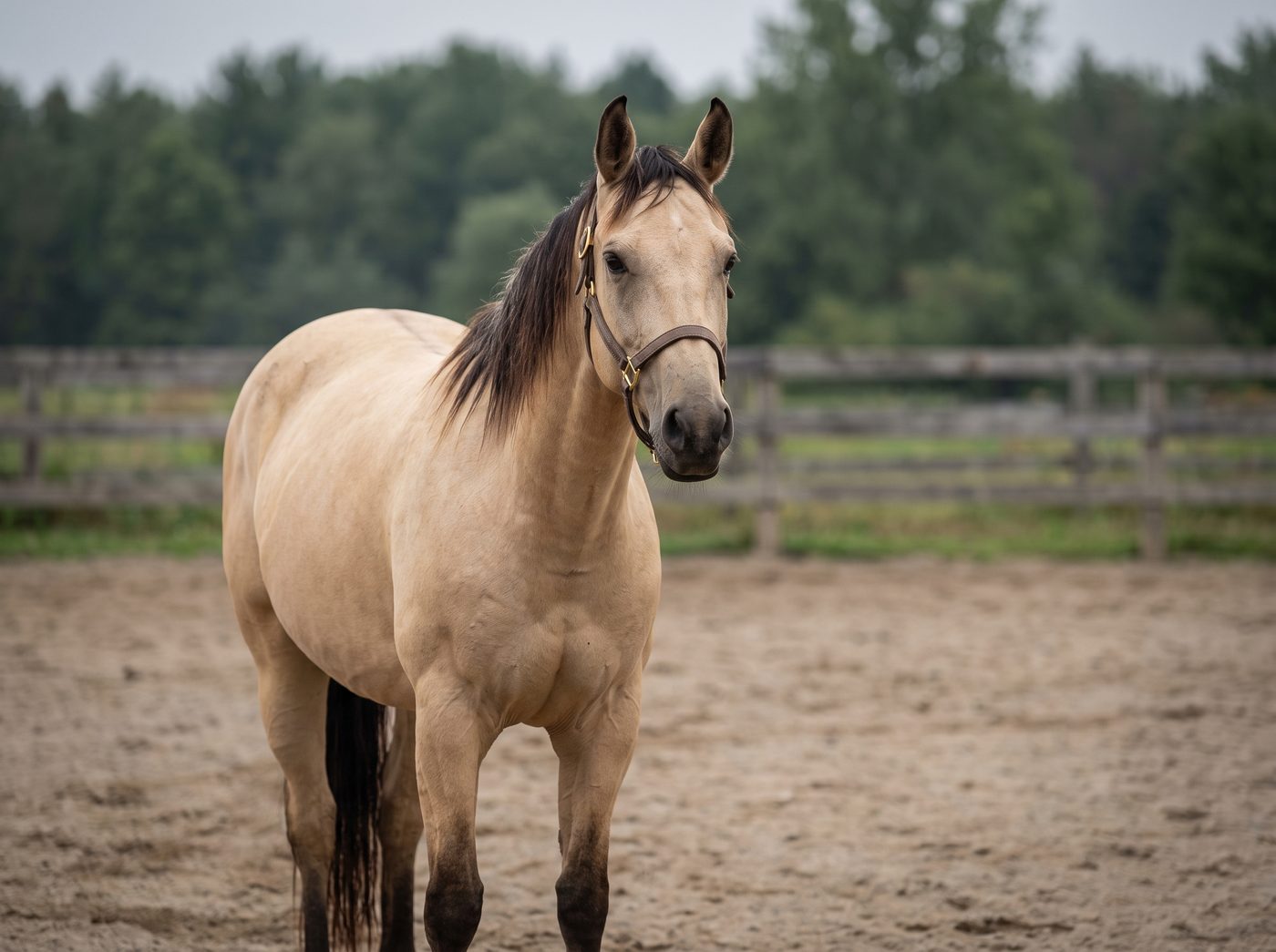
The difference
Led by a registered clinical psychologist
Here, the work is delivered personally by Dr. Duncan Day, a registered Clinical Psychologist and Clinical Neuropsychologist with nearly 30 years of clinical experience, mostly in Ontario, and currently registered to practise in the Yukon as well. Sessions can be offered in French on request.
Here’s why that matters. Equine work can open more than expected: grief, memory, a wave of emotion with no warning. As a regulated mental-health professional with a doctorate and decades of clinical experience, Dr. Day’s scope of practice covers those harder moments too, so the work can continue with him rather than being handed off.
If it gets hard, you stay with the same person.
As a licensed psychologist, Dr. Day is trained to recognize what’s happening and stay with you through it, safely and ethically. He is a PRO-EFW Certification Candidate in the final stages of certification, and sits on the PRO-EFW Board.

Certification Candidate
PRO-EFW Board member
What to expect
What a session looks like
We always work at your pace. No rushing. Slower is better. An individual session runs about 90 minutes, sometimes longer. Group sessions are longer, up to three hours.
- 1
Settle in
A safety review, then a few minutes to centre before you meet the horses: a quiet walk, or a moment of reflection.
- 2
Meet the herd
We introduce the horses and talk through what today’s work will focus on.
- 3
The work
In a safe space (outdoor arena until winter, then we head indoors) you will spend from 15 to 30 minutes working under supervision with a horse, in various activities such as grooming, leading, learning their body language and connecting. Over time this may include liberty work.
- 4
Debrief
We close by processing and making sense of what came up, and setting the next step.
A typical course runs 8 sessions. More can be offered after this.
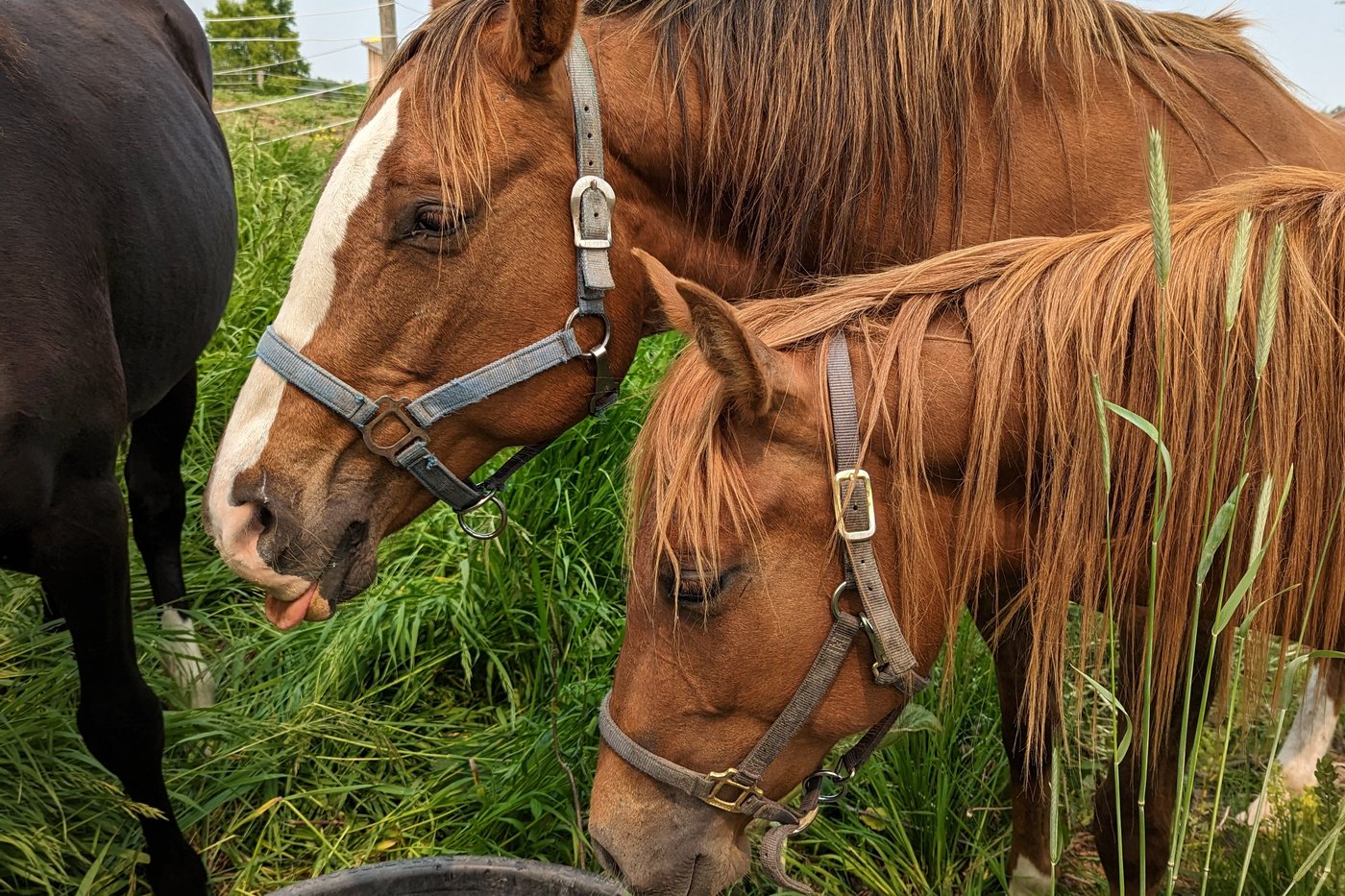
Safety comes first
Nothing proceeds without a yes
We work by a simple rule we call the three yesses. Sometimes that means changing the plan, and that pivot is often where the real work happens.
From you
Your pace sets the session. You can stop, step back, or change direction at any point, without explaining why.
From the horse
The horse’s consent matters as much as yours. If a horse says no today, we listen and adapt.
From the therapist/specialist
The equine therapist and/or equine specialist watch the horse and the environment throughout, and can pause the work at any time.
Our team is trained in horsemanship and certified in first aid, with first-aid kits on site. An AED is planned for the near future. Your privacy is protected under PHIPA, and the horses are cared for to the national Code of Practice for the care and handling of equines.
Funding
Funding and coverage
Sessions are delivered by a registered psychologist and billed through Dr. Day’s practice as psychological services, which opens funding paths that pure equine programs can’t. Veterans may be eligible for coverage of psychological services through Veterans Affairs Canada, administered by Medavie Blue Cross, and Dr. Day requests the pre-authorization; serving CAF members are typically covered through CF Health Services. For other first responders and groups, other coverage options may be available. We’ll explore options with you. Eligibility is determined by VAC or your provider. We’ll help you confirm what applies to you before you book.
Common questions
Do I have to ride?
No. All of the work is done on the ground.
What should I wear or bring?
Closed-toe boots or sturdy shoes, layers, a jacket in case of rain, bug spray, and a water bottle. We handle the rest.
I’ve never been around horses. Is that okay?
More than okay. No experience is needed. For many people, simply being near a horse for the first time is where it starts.
Is it confidential?
Yes. The same professional confidentiality standards as any registered-psychology service apply.
How many sessions will I need?
A typical course runs 8 sessions, and more can be offered after that. We start with a consultation to find the right fit.
You don’t have to be ready to explain everything. You just have to be curious enough to reach out.
A conversation first, always. Booking is arranged personally so it fits around the working farm.